
Best Types of Batteries for Solar Power: A Comprehensive Guide
When it comes to solar energy, selecting the right battery for your solar power system is crucial. The best types of batteries for solar power can greatly impact the efficiency, cost-effectiveness, and reliability of your energy storage solution. In this guide, we’ll break down the top options available for storing solar energy, discussing their advantages, disadvantages, and ideal use cases.
What Makes a Solar Battery “The Best”?
The best types of batteries for solar power share some common characteristics:
- High energy density: More energy stored per unit volume or mass.
- Long lifespan: Batteries that last many years, especially in terms of charge/discharge cycles.
- Safety: Batteries should be safe to use, minimizing risks like overheating or leakage.
- Efficiency: High round-trip efficiency (the ratio of energy retrieved from the battery vs. the energy used to charge it).
- Cost-effectiveness: Optimal performance at a reasonable price, considering both the upfront cost and the long-term savings.
Let’s dive into the most popular options.
1. Lithium-Ion Batteries
Lithium-ion (Li-ion) batteries are by far the most popular choice for solar power storage today. They are known for their compact size, high energy density, and relatively long lifespan.
Advantages:
- Long lifespan: Li-ion batteries can last between 10 to 15 years, with a large number of charge/discharge cycles (usually around 3,000–5,000 cycles).
- High efficiency: Lithium-ion batteries typically have an efficiency of around 95% or more, meaning very little energy is lost during the charging and discharging process.
- Compact and lightweight: These batteries are much smaller and lighter than their lead-acid counterparts, making them ideal for residential use, especially where space is limited.
- Fast charging: Lithium-ion batteries charge faster compared to other types, allowing for quick energy storage during sunny periods.
- Low maintenance: They require minimal upkeep compared to traditional battery types, with no need for regular watering or monitoring.
Disadvantages:
- Higher initial cost: While their price has decreased in recent years, Li-ion batteries are still more expensive upfront than lead-acid or saltwater options.
- Sensitive to temperature: Lithium-ion batteries perform best in moderate temperatures. Extreme heat or cold can affect their lifespan and performance.
Best Use Case:
Lithium-ion batteries are ideal for homeowners and businesses that need reliable, high-efficiency energy storage with limited space. They are particularly suitable for grid-tied systems with or without backup capabilities.
2. LiFePO4 Batteries (Lithium Iron Phosphate)
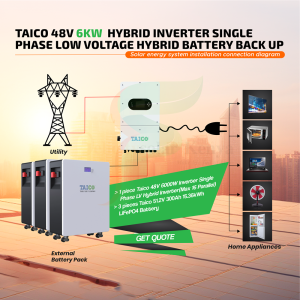
LiFePO4 batteries are a specific type of lithium-ion battery, but with a different chemistry that offers certain advantages over traditional lithium-ion batteries. They have become increasingly popular in the solar industry for their reliability and safety features.
Advantages:
- Enhanced safety: LiFePO4 batteries are less prone to overheating or combustion compared to standard lithium-ion batteries, making them one of the safest options.
- Long lifespan: With proper care, LiFePO4 batteries can last up to 15–20 years, with up to 5,000–7,000 charge cycles.
- Stable performance: They are less sensitive to temperature fluctuations than other lithium batteries.
- High efficiency: Like other lithium-based batteries, they boast efficiency rates of 95% or more.
- Environmentally friendly: LiFePO4 batteries do not use toxic heavy metals, making them more eco-friendly.
Disadvantages:
- Higher initial cost: Like lithium-ion batteries, LiFePO4 batteries can be expensive upfront.
- Lower energy density: Although they have a long lifespan, their energy density is slightly lower compared to other lithium-ion batteries, meaning they take up more space for the same amount of energy storage.
Best Use Case:
LiFePO4 batteries are best for users who prioritize safety and longevity. They’re a great choice for both residential and off-grid solar systems that need a reliable and long-lasting storage solution.
3. Lead-Acid Batteries
Lead-acid batteries are among the best types of batteries for solar power and they have been used for decades in solar energy systems. They are typically less expensive upfront but come with trade-offs in performance and lifespan compared to newer technologies.
Advantages:
- Lower initial cost: Lead-acid batteries are much cheaper than lithium-based batteries, making them a good option for those on a tighter budget.
- Well-established technology: This type of battery has been used in solar systems for years, so the technology is tried and tested.
- Easily recyclable: Lead-acid batteries are widely recycled, making them more environmentally friendly than they might appear at first glance.
Disadvantages:
- Shorter lifespan: Lead-acid batteries typically last between 3 to 7 years, with a much lower cycle life (about 500–1,000 cycles).
- Lower efficiency: The round-trip efficiency of lead-acid batteries is around 80%–85%, meaning more energy is lost in the charging and discharging process.
- Size and weight: These batteries are bulky and heavy, requiring more space than lithium-based alternatives.
- Maintenance required: Lead-acid batteries often require regular maintenance, such as checking electrolyte levels and ensuring proper ventilation to prevent gas buildup.
Best Use Case:
Lead-acid batteries are still a good option for off-grid or backup solar power systems, particularly when budget constraints are a significant factor. They are also ideal for users who don’t mind performing periodic maintenance.
4. Flow Batteries
Flow batteries are a type of rechargeable battery that stores energy in liquid form, using two chemical components dissolved in liquids separated by a membrane. They are still emerging in the solar market but are gaining attention for their scalability and long lifespan.
Advantages:
- Long lifespan: Flow batteries can last 10–15 years with minimal degradation, making them a good long-term investment.
- Scalability: They are highly scalable, meaning you can increase their energy storage capacity simply by increasing the size of the tanks that hold the electrolyte solution.
- Low risk of thermal runaway: Flow batteries are less prone to overheating and fires compared to lithium-ion batteries.
Disadvantages:
- Expensive: Flow batteries are still relatively expensive compared to traditional batteries, particularly for residential solar installations.
- Large size: These systems require significant space, making them less practical for small-scale residential applications.
- Lower efficiency: Flow batteries typically have an efficiency range of around 60%–75%.
Best Use Case:
Flow batteries are ideal for large-scale energy storage applications, such as in commercial or industrial solar power systems, where space and budget are less of a concern.
5. Saltwater Batteries
Saltwater batteries are an emerging technology in the solar power industry that uses saline (salt-based) electrolytes for energy storage. They are considered a more sustainable option for those looking for eco-friendly energy storage solutions.
Advantages:
- Environmentally friendly: Saltwater batteries use non-toxic and abundant materials, making them a greener alternative compared to other types.
- Safety: These batteries are non-flammable, making them one of the safest options available.
- Long lifespan: Saltwater batteries can last up to 10 years, depending on usage and conditions.
- No rare materials: Unlike lithium batteries, they do not rely on rare materials like cobalt or nickel, reducing supply chain concerns.
Disadvantages:
- Lower energy density: Saltwater batteries have a lower energy density, meaning they require more space to store the same amount of energy.
- Still in development: This technology is newer, so the market is smaller, and there may be fewer manufacturers offering these batteries.
- Lower efficiency: The round-trip efficiency of saltwater batteries is typically around 70%–75%, meaning more energy is lost during charging and discharging.
Best Use Case:
Saltwater batteries are ideal for those who are environmentally conscious and looking for a safe, sustainable solution, especially in areas where battery recycling or resource sustainability is a concern.




Conclusion: Which Battery Is Best for You?
The best types of batteries for solar power depend on your specific needs, budget, and priorities. Here’s a quick summary:
- Lithium-Ion: Ideal for residential systems, offering high efficiency, compact size, and long lifespan at a higher upfront cost.
- LiFePO4 (Lithium Iron Phosphate): Perfect for those looking for enhanced safety and longevity, ideal for both residential and off-grid systems.
- Lead-Acid: A budget-friendly option for off-grid or backup systems, but with a shorter lifespan and more maintenance required.
- Saltwater: A newer, environmentally friendly option with low energy density, best for users prioritizing sustainability over space efficiency.
- Flow Batteries: Best suited for commercial-scale or large off-grid applications where scalability and lifespan are critical.
Each battery type has its pros and cons, so it’s important to weigh them carefully when selecting a solar energy storage solution. Contact Taico Power Kenya today for the best solar power batteries and we will help you choose the best solar type of batteries for solar power, make sure it aligns with your energy needs, budget, and long-term goals for a sustainable solar power system.